
Coimbatore
08048121649
+919842780246
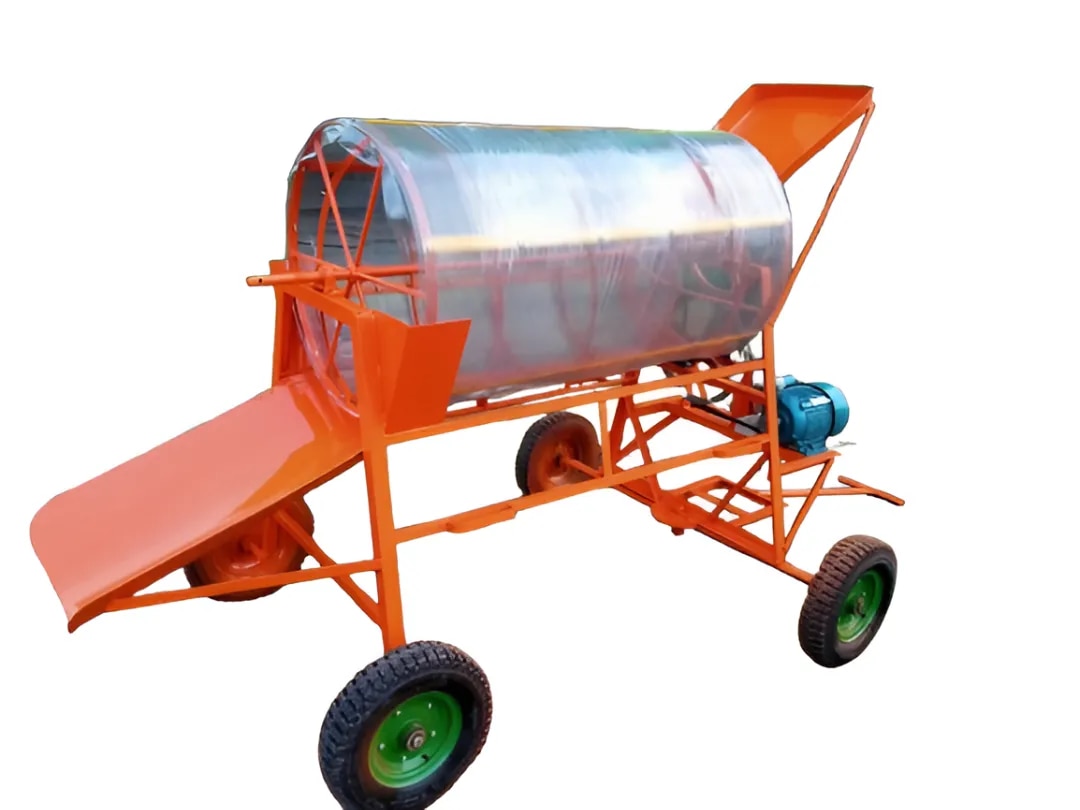
Sand Seiver by Vardhaman Engineering

Sand Seiver Rotational Type

Phone Number

08048121649

Please keep 0 before dialling the number.

Mon-Thu: 10 AM - 2 PM • Fri: 3 PM - 7AM

Address 673/1, S.S.T Mill Road, post, R.G, Pudur, Chinniyampalayam, Coimbatore, Tamil Nadu 641062

Coimbatore, India, 641062

Description

A Rotary Sand Siever Machine is an industrial tool designed to separate sand from larger particles like stones, gravel, and debris by using a rotating drum or mechanism. This mechanized process is significantly more efficient than manual sieving, saving time and labor costs in construction and other industrial applications. Key Details and Operation The core function of a rotary sand siever is to ensure the sand is of a consistent size and quality required for specific uses, such as concrete mixing, plastering, or foundry work. Working Principle: The primary mechanism involves a motor that provides rotational motion. This rotation is transmitted to a cylindrical sieve drum or a sieve box equipped with a mesh screen. In some designs, the rotation of a motor is converted into a reciprocating (back-and-forth) motion of the sieve box via mechanisms like a Scotch Yoke or a crank and connecting rod. In other designs, the entire cylindrical drum rotates (often at a low speed of around 15-25 rpm) while inclined at a slight angle. Sieving Process: Raw sand is fed into a hopper, which directs it onto or into the rotating/reciprocating mesh screen. Smaller, fine sand particles pass through the mesh openings due to the motion and gravity, collecting in a tray or discharge area below. Larger, unwanted materials (oversize) are retained on the mesh and are typically discharged through a separate outlet. Main Components Motor: An electric motor (typically 1 to 2 HP, single-phase for smaller models) provides the power for the rotational/mechanical movement. Chassis/Frame: A sturdy frame, usually made of mild steel (MS) for durability and corrosion resistance, supports all components and provides stability. Sieve Net/Mesh: A durable screen with specific hole sizes, which can be changed to achieve different grades of sand as per project requirements. Feed Hopper: The entry point where the raw sand is loaded. Conveyor System (Optional): Larger or more automated machines may incorporate a conveyor system, such as a belt or bucket conveyor, to transport the sieved sand or feed the raw material into the machine, further reducing manual labor. Types and Specifications Rotary sand sievers come in various models, from manual-operated to semi-automatic and fully automatic, with specifications varying based on the intended application. Automation Grade: Available in Manual, Semi-Automatic, and Automatic options. Capacity: Ranges from 100 kg per day for smaller, portable units to several tons per hour for industrial-scale machines. Portability: Many models are designed to be portable, often including wheels, making them suitable for use directly on construction sites. Power: Usually operates on standard electrical voltages like 220V or 230V, with some larger machines requiring 440V. Advantages Increased Efficiency: Automates the process, significantly faster than manual labor. Consistent Quality: Ensures uniform particle size and removal of impurities, leading to better quality construction materials. Reduced Labor: Minimizes human intervention and physical strain on workers. Cost-Effective: While there is an initial investment, the long-term savings in labor and increased productivity make it an economically viable choice for construction projects.
Other Products

view all

6814772a5d263414004dd4a4 Card 2

product image
Concrete Mixer Machine

Hydraulic Concrete Mixer Machine - Manufacturer in Howrah ...A Hydraulic Hopper Concrete Mixer Machine uses hydraulic power to lift and feed raw materials (cement, sand, aggregates) into a rotating drum, ensuring fast, safe, and consistent concrete mixing by reducing manual labor and improving batch times with features like a heavy-duty steel body, pneumatic wheels for mobility, and engine/motor options (diesel, electric) for versatile use on construction sites. Key Components & Features: Hydraulic Hopper: The defining feature, it automatically lifts and tilts to load materials, reducing physical effort and risk. Mixing Drum: Heavy-duty steel with internal blades rotates to ensure homogeneous mixing of materials. Power Source: Available with diesel engines (for off-grid) or electric motors (single/three-phase). Chassis & Mobility: Robust steel frame with pneumatic tires for stability and easy movement on rough terrains. Safety Features: Includes hopper locks, overload protection, and emergency stops for operator safety. How it Works: Loading: Materials are loaded into the hopper (manual or automatic feeding). Lifting: The hydraulic system smoothly raises the hopper. Mixing: The hopper tilts, dumping materials into the rotating drum, where they are mixed. Discharge: Once mixed, the drum's rotation is reversed (or a separate discharge door opened) to empty the concrete. Applications: Building Construction: Foundations, beams, columns, slabs. Road Works: Small-scale pavement and surfacing. Infrastructure: Bridges, culverts, and other on-site projects. Benefits: Efficiency: Faster loading and mixing cycles. Quality: Consistent, uniform concrete batches. Safety: Less manual handling of heavy materials. Versatility: Portable and suitable for various site conditions.

6814772a5d263414004dd4a4 Card 2

product image
Concrete Mixer Machine

A Hydraulic Hopper Concrete Mixer Machine uses hydraulic power to lift and feed raw materials (cement, sand, aggregates) into a rotating drum, ensuring fast, safe, and consistent concrete mixing by reducing manual labor and improving batch times with features like a heavy-duty steel body, pneumatic wheels for mobility, and engine/motor options (diesel, electric) for versatile use on construction sites. Key Components & Features: Hydraulic Hopper: The defining feature, it automatically lifts and tilts to load materials, reducing physical effort and risk. Mixing Drum: Heavy-duty steel with internal blades rotates to ensure homogeneous mixing of materials. Power Source: Available with diesel engines (for off-grid) or electric motors (single/three-phase). Chassis & Mobility: Robust steel frame with pneumatic tires for stability and easy movement on rough terrains. Safety Features: Includes hopper locks, overload protection, and emergency stops for operator safety. How it Works: Loading: Materials are loaded into the hopper (manual or automatic feeding). Lifting: The hydraulic system smoothly raises the hopper. Mixing: The hopper tilts, dumping materials into the rotating drum, where they are mixed. Discharge: Once mixed, the drum's rotation is reversed (or a separate discharge door opened) to empty the concrete. Applications: Building Construction: Foundations, beams, columns, slabs. Road Works: Small-scale pavement and surfacing. Infrastructure: Bridges, culverts, and other on-site projects. Benefits: Efficiency: Faster loading and mixing cycles. Quality: Consistent, uniform concrete batches. Safety: Less manual handling of heavy materials. Versatility: Portable and suitable for various site conditions.

6814772a5d263414004dd4a4 Card 2

product image
Concrete Mixer Machine

A Hydraulic Hopper Concrete Mixer Machine uses hydraulic power to lift and feed raw materials (cement, sand, aggregates) into a rotating drum, ensuring fast, safe, and consistent concrete mixing by reducing manual labor and improving batch times with features like a heavy-duty steel body, pneumatic wheels for mobility, and engine/motor options (diesel, electric) for versatile use on construction sites. Key Components & Features: Hydraulic Hopper: The defining feature, it automatically lifts and tilts to load materials, reducing physical effort and risk. Mixing Drum: Heavy-duty steel with internal blades rotates to ensure homogeneous mixing of materials. Power Source: Available with diesel engines (for off-grid) or electric motors (single/three-phase). Chassis & Mobility: Robust steel frame with pneumatic tires for stability and easy movement on rough terrains. Safety Features: Includes hopper locks, overload protection, and emergency stops for operator safety. How it Works: Loading: Materials are loaded into the hopper (manual or automatic feeding). Lifting: The hydraulic system smoothly raises the hopper. Mixing: The hopper tilts, dumping materials into the rotating drum, where they are mixed. Discharge: Once mixed, the drum's rotation is reversed (or a separate discharge door opened) to empty the concrete. Applications: Building Construction: Foundations, beams, columns, slabs. Road Works: Small-scale pavement and surfacing. Infrastructure: Bridges, culverts, and other on-site projects. Benefits: Efficiency: Faster loading and mixing cycles. Quality: Consistent, uniform concrete batches. Safety: Less manual handling of heavy materials. Versatility: Portable and suitable for various site conditions.