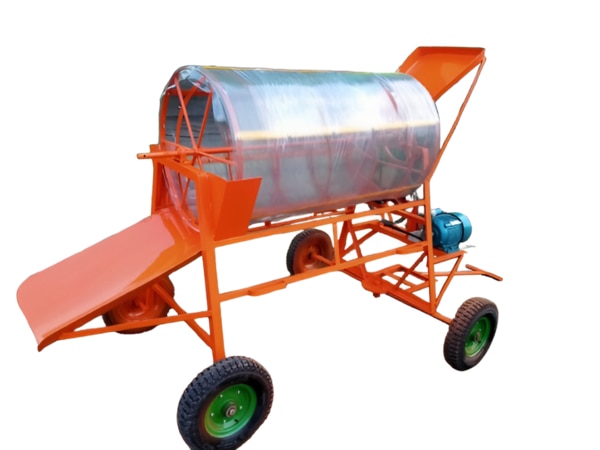
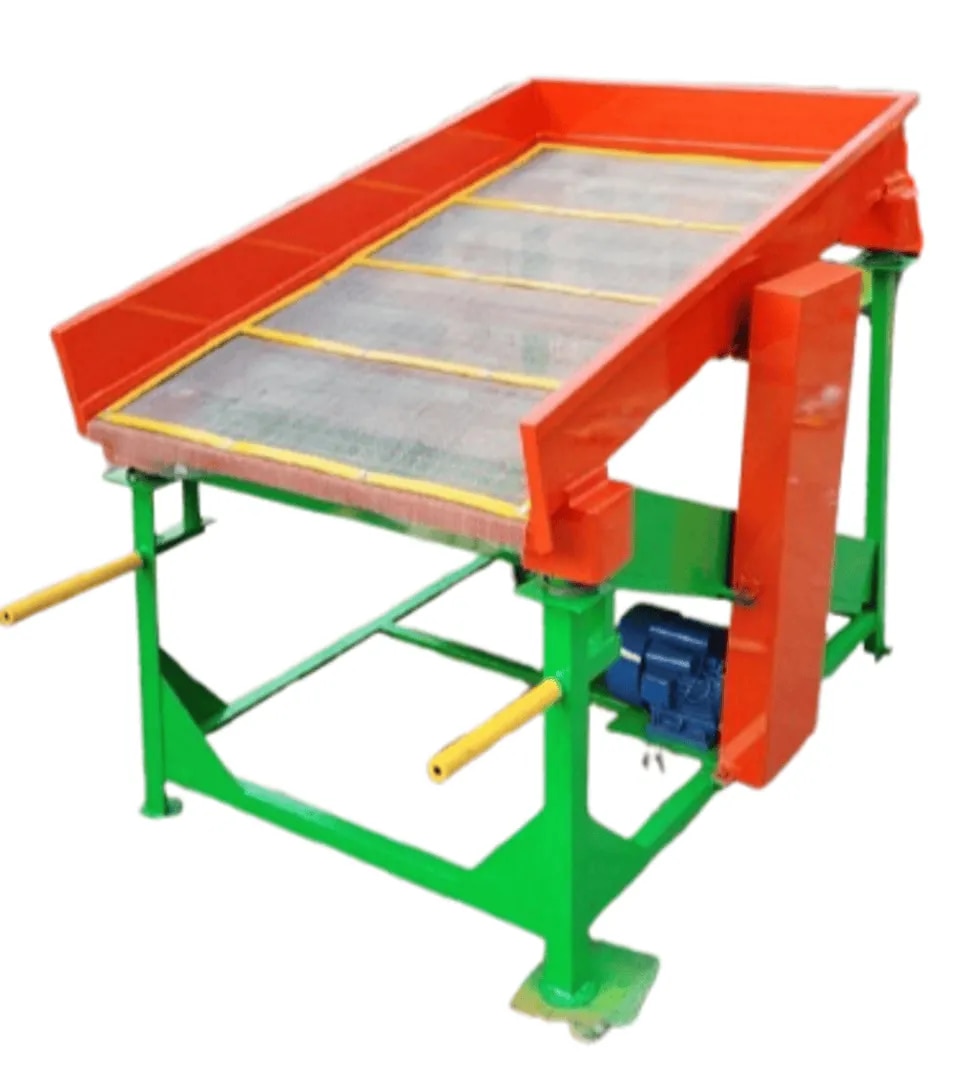
Sand Seiver Table Type
Description
A Sand Sieve Table Type machine is a powered device for construction, using a vibrating mesh on a table to automatically separate impurities and oversized particles from sand, reducing manual labor; it works by converting motor rotation into a sliding motion for the mesh, allowing fine sand to pass through while retaining stones and debris in a compact, stable setup. Key parts include a motor, belt/linkage system, mesh screen with varied hole sizes, a frame for stability, and often a feed hopper and collection channel for efficiency.
Key Components & Functionality:
Motor & Drive System: An electric motor provides power, transferred via belts or linkages to create a back-and-forth (reciprocating) or vibrating motion for the sieve.
Vibrating Mesh: The core component, a durable screen with specific hole sizes to filter out unwanted coarse materials like stones, while letting clean sand fall through.
Frame & Table: A sturdy metal frame supports the vibrating mechanism and provides a stable “table” for operation, making it ergonomic and durable.
Feed Hopper: Where raw, unsifted sand is loaded into the machine.
Collection Channel: Guides the clean, sieved sand to a specific location, separating it from impurities.
How It Works:
Loading: Raw sand is poured into the feed hopper.
Vibration: The motor activates the drive system, causing the mesh screen to vibrate or slide back and forth.
Sieving: As the sand moves across the mesh, fine particles fall through the holes, while larger debris (stones, clumps) remains on top.
Collection: Clean sand drops into a designated area, while coarse materials are manually removed from the mesh.
Benefits:
Efficiency: Significantly faster and less labor-intensive than manual sieving.
Consistency: Produces uniformly sieved sand, crucial for construction quality.
Reduced Interference: Minimizes human effort and exposure to dust and heavy lifting.
Durability: Built with mild steel and paint-coated for use in tough construction environments.