


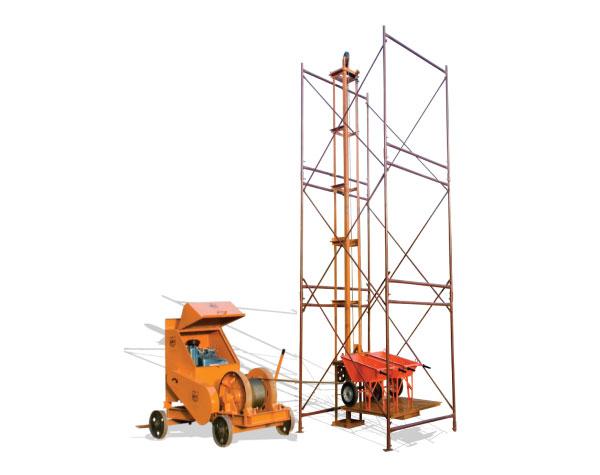
A Builder's Hoist (or Tower Hoist) is a crucial construction machine for safely lifting heavy materials (bricks, cement, tools) and sometimes workers vertically on high-rise sites, using an electric motor driving a rack-and-pinion system or winch to move a platform or cage up a mast, improving productivity by replacing manual labor and enabling vertical transport where cranes can't reach. Key features include sturdy mast sections, robust drive systems (electric/diesel), safety brakes, and platforms designed for efficient loading and unloading, with variations for materials only or personnel. Key Components Mast: A vertical tower structure made of bolted sections (often 3m long) that provides support and guidance for the platform. Hoisting Mechanism (Winch/Motor): An electric motor turns gears (pinions) that mesh with teeth on the mast (rack), pulling the platform up or down. Platform/Cage: Carries materials (like concrete, blocks) or workers, often with guardrails, designed for easy loading/unloading. Control Panel: For operating the hoist from the ground or platform. How it Works (Rack & Pinion) Power: An electric motor is activated. Gear Engagement: The motor turns a pinion gear. Vertical Movement: The pinion gear “climbs” the toothed rack attached to the mast, pulling the attached platform upwards. Descent: The motor reverses, allowing controlled lowering. Types & Features Material Hoists: Open platforms, focus on heavy loads (bricks, sand, concrete). Personnel/Material Hoists: Enclosed cabins for transporting people and materials. Power Options: Electric motors or diesel engines. Safety: Essential brakes, emergency stops, overload protection, and trained operators. Applications Lifting materials for high-rise buildings, bridges, and infrastructure. Transporting goods to floors where cranes can't easily reach. Reducing manual labor and speeding up construction.
Address
673/1, S.S.T Mill Road, post, R.G, Pudur, Chinniyampalayam, Coimbatore, Tamil Nadu 641062
Coimbatore, India, 641062