Coimbatore
08048121649
+919842780246
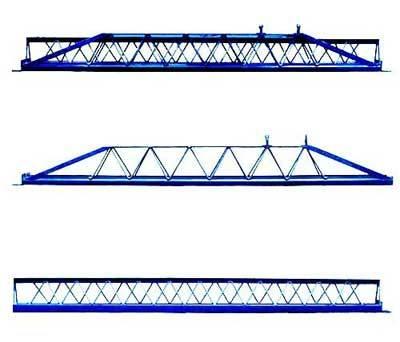
Scaffolding Material by Vardhaman Engineering

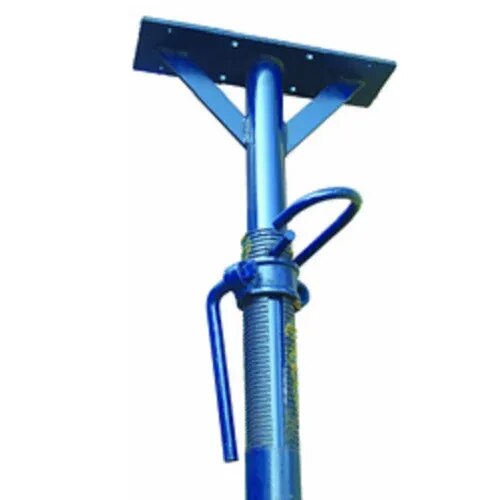
Scaffolding jockey

Phone Number

08048121649

Please keep 0 before dialling the number.

Mon-Thu: 10 AM - 2 PM • Fri: 3 PM - 7AM

Address 673/1, S.S.T Mill Road, post, R.G, Pudur, Chinniyampalayam, Coimbatore, Tamil Nadu 641062

Coimbatore, India, 641062

Description

A scaffolding jack (also called a prop jack, base jack, or U-head jack) is an adjustable, load-bearing component used to provide stable and precise vertical support for scaffolding structures and formwork during construction. Key Details and Function Primary Function: Scaffolding jacks are crucial safety components. Their main purpose is to transfer the weight of the scaffold, workers, and materials safely to the ground or supporting surface. Adjustability: They feature a threaded rod and a corresponding jack nut or handle mechanism which allows for precise height adjustments. This is essential for: Leveling the scaffolding on uneven ground or surfaces. Achieving exact heights for formwork (e.g., supporting concrete slabs or beams). Material: They are typically made from durable materials like mild steel or iron, often with a galvanized or painted finish to resist corrosion and ensure strength under heavy loads. Components: A standard jack assembly includes: Base Plate/U-Head Plate: A flat plate at the bottom (base jack) to distribute the load onto a sole board or the ground, or a U-shaped head plate at the top (U-head jack) to support beams or ledgers. Inner and Outer Tubes: A telescopic design where an inner tube moves within a larger outer tube for height extension/retraction. Threaded Portion/Jack Nut: The mechanism used to precisely adjust and lock the height in place. Safety Features: Many include safety pins or locking mechanisms to prevent accidental collapse or movement. Types of Jacks Base Jack: Sits at the bottom of the scaffold's vertical standards (uprights) to provide a stable, adjustable foundation. U-Head Jack: Placed at the top of a prop or standard, featuring a U-shaped head to securely hold horizontal components like timber beams or ledgers for formwork. In essence, the scaffolding jack is a fundamental, versatile component that provides the necessary stability, adjustability, and load-bearing capacity for safe and efficient construction work at various heights.
Other Products

view all

6814772a5d263414004dd4a4 Card 2

product image
Concrete Mixer Machine

Hydraulic Concrete Mixer Machine - Manufacturer in Howrah ...A Hydraulic Hopper Concrete Mixer Machine uses hydraulic power to lift and feed raw materials (cement, sand, aggregates) into a rotating drum, ensuring fast, safe, and consistent concrete mixing by reducing manual labor and improving batch times with features like a heavy-duty steel body, pneumatic wheels for mobility, and engine/motor options (diesel, electric) for versatile use on construction sites. Key Components & Features: Hydraulic Hopper: The defining feature, it automatically lifts and tilts to load materials, reducing physical effort and risk. Mixing Drum: Heavy-duty steel with internal blades rotates to ensure homogeneous mixing of materials. Power Source: Available with diesel engines (for off-grid) or electric motors (single/three-phase). Chassis & Mobility: Robust steel frame with pneumatic tires for stability and easy movement on rough terrains. Safety Features: Includes hopper locks, overload protection, and emergency stops for operator safety. How it Works: Loading: Materials are loaded into the hopper (manual or automatic feeding). Lifting: The hydraulic system smoothly raises the hopper. Mixing: The hopper tilts, dumping materials into the rotating drum, where they are mixed. Discharge: Once mixed, the drum's rotation is reversed (or a separate discharge door opened) to empty the concrete. Applications: Building Construction: Foundations, beams, columns, slabs. Road Works: Small-scale pavement and surfacing. Infrastructure: Bridges, culverts, and other on-site projects. Benefits: Efficiency: Faster loading and mixing cycles. Quality: Consistent, uniform concrete batches. Safety: Less manual handling of heavy materials. Versatility: Portable and suitable for various site conditions.

6814772a5d263414004dd4a4 Card 2

product image
Concrete Mixer Machine

A Hydraulic Hopper Concrete Mixer Machine uses hydraulic power to lift and feed raw materials (cement, sand, aggregates) into a rotating drum, ensuring fast, safe, and consistent concrete mixing by reducing manual labor and improving batch times with features like a heavy-duty steel body, pneumatic wheels for mobility, and engine/motor options (diesel, electric) for versatile use on construction sites. Key Components & Features: Hydraulic Hopper: The defining feature, it automatically lifts and tilts to load materials, reducing physical effort and risk. Mixing Drum: Heavy-duty steel with internal blades rotates to ensure homogeneous mixing of materials. Power Source: Available with diesel engines (for off-grid) or electric motors (single/three-phase). Chassis & Mobility: Robust steel frame with pneumatic tires for stability and easy movement on rough terrains. Safety Features: Includes hopper locks, overload protection, and emergency stops for operator safety. How it Works: Loading: Materials are loaded into the hopper (manual or automatic feeding). Lifting: The hydraulic system smoothly raises the hopper. Mixing: The hopper tilts, dumping materials into the rotating drum, where they are mixed. Discharge: Once mixed, the drum's rotation is reversed (or a separate discharge door opened) to empty the concrete. Applications: Building Construction: Foundations, beams, columns, slabs. Road Works: Small-scale pavement and surfacing. Infrastructure: Bridges, culverts, and other on-site projects. Benefits: Efficiency: Faster loading and mixing cycles. Quality: Consistent, uniform concrete batches. Safety: Less manual handling of heavy materials. Versatility: Portable and suitable for various site conditions.

6814772a5d263414004dd4a4 Card 2

product image
Concrete Mixer Machine

A Hydraulic Hopper Concrete Mixer Machine uses hydraulic power to lift and feed raw materials (cement, sand, aggregates) into a rotating drum, ensuring fast, safe, and consistent concrete mixing by reducing manual labor and improving batch times with features like a heavy-duty steel body, pneumatic wheels for mobility, and engine/motor options (diesel, electric) for versatile use on construction sites. Key Components & Features: Hydraulic Hopper: The defining feature, it automatically lifts and tilts to load materials, reducing physical effort and risk. Mixing Drum: Heavy-duty steel with internal blades rotates to ensure homogeneous mixing of materials. Power Source: Available with diesel engines (for off-grid) or electric motors (single/three-phase). Chassis & Mobility: Robust steel frame with pneumatic tires for stability and easy movement on rough terrains. Safety Features: Includes hopper locks, overload protection, and emergency stops for operator safety. How it Works: Loading: Materials are loaded into the hopper (manual or automatic feeding). Lifting: The hydraulic system smoothly raises the hopper. Mixing: The hopper tilts, dumping materials into the rotating drum, where they are mixed. Discharge: Once mixed, the drum's rotation is reversed (or a separate discharge door opened) to empty the concrete. Applications: Building Construction: Foundations, beams, columns, slabs. Road Works: Small-scale pavement and surfacing. Infrastructure: Bridges, culverts, and other on-site projects. Benefits: Efficiency: Faster loading and mixing cycles. Quality: Consistent, uniform concrete batches. Safety: Less manual handling of heavy materials. Versatility: Portable and suitable for various site conditions.